Spills, Stains and Stone: What Wine, Oil and Citrus Do to Each Counter Material
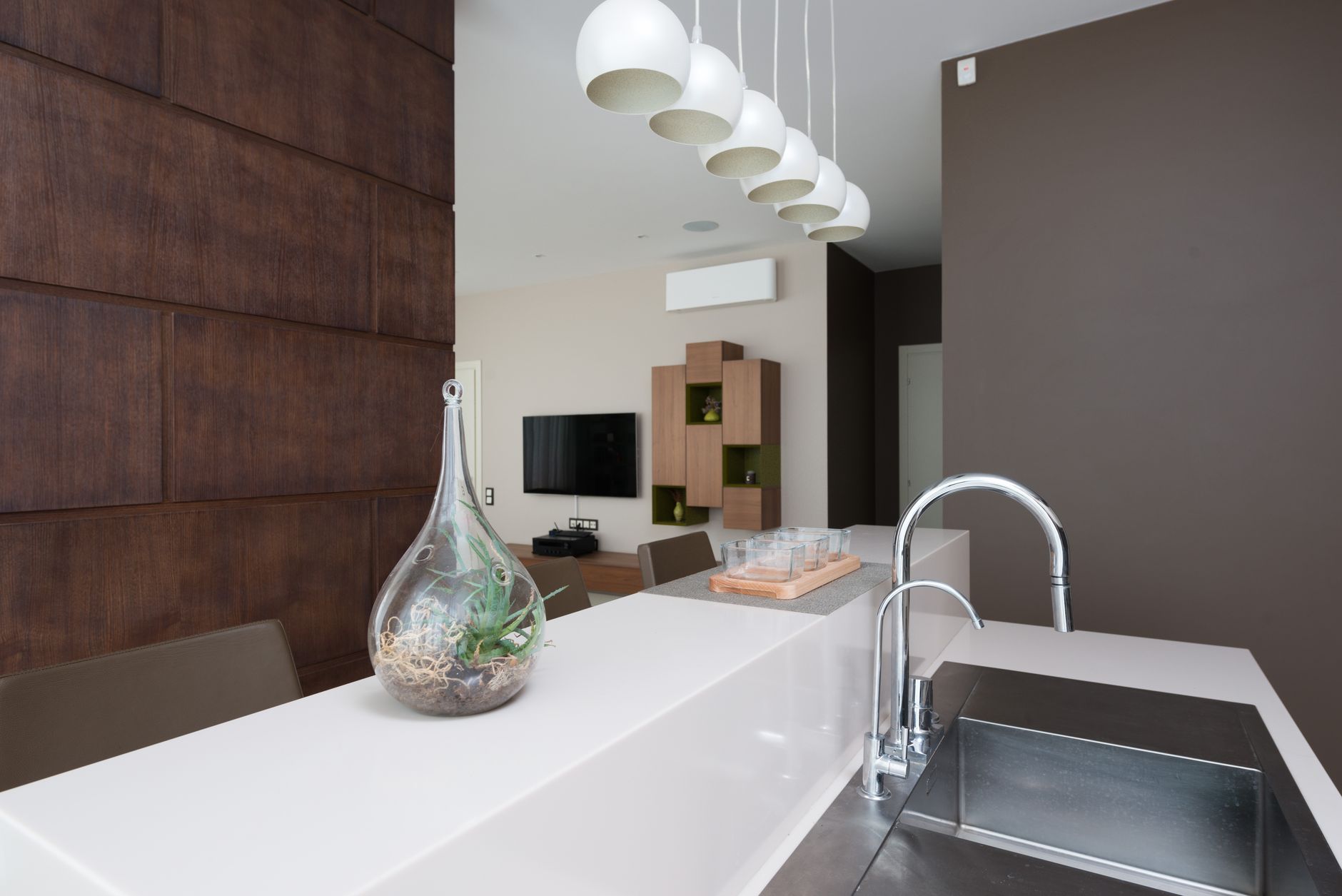
A harvest weekend in Temecula Valley wine country puts a lot of liquid on a lot of countertops. Red wine goes down at the island, olive oil goes onto the bread, a lemon wedge ends up on the edge of a glass, and somebody sets a hot sheet pan on the one spot that was supposed to stay clear. Each of those leaves a different mark depending on what the counter is made of, and the marks are mostly predictable once the material is known.
Why do the same spills behave differently on different counters?
Three properties decide almost everything: how porous the surface is, how reactive it is to acid, and how well it tolerates heat. Quartz and porcelain slab are close to nonporous, so liquid sits on top and wipes off. Granite and quartzite are natural stone with tiny pores that range from nearly sealed to fairly open depending on the slab. Marble and concrete are the thirstiest and the most reactive, and each needs a protective coat to behave in a kitchen that sees real use.
Acid is a separate matter from staining. A stain is a pigment that soaks in. An etch is a chemical reaction that dulls the polish on calcium-based stone, and it can happen in minutes with no color at all. Wine, citrus, vinegar and tomato are all acidic, which is why a lemon wedge can do more damage to marble than a glass of red.
What does each common spill do to each material?
The table below is a rule-of-thumb reading, based on how these materials are made and how they behave in kitchens around the valley. A sealed surface performs better than an unsealed one in every row that involves natural stone.
| Material | Red wine | Olive oil | Lemon or vinegar | Hot pan |
|---|---|---|---|---|
| Quartz | Wipes off | Wipes off | No effect on the surface | Resin can mark, use a trivet |
| Porcelain slab | Wipes off | Wipes off | No effect | Tolerates heat well |
| Dense granite | Safe if sealed | Safe if sealed | No effect | Tolerates heat well |
| Open-grained granite | Can stain if left | Can darken | Mostly no effect | Tolerates heat well |
| Quartzite | Safe if sealed | Can darken if unsealed | True quartzite is unaffected | Tolerates heat well |
| Marble | Stains and etches | Darkens | Etches quickly | Usually fine, but check the finish |
| Concrete | Stains without a good sealer | Darkens | Etches the surface | Tolerates heat, sealer may mark |
How should red wine be cleaned up?
Speed matters more than product. Blot the spill with a paper towel instead of wiping, because wiping spreads the liquid into the pores around it. Follow with warm water and a few drops of dish soap on a soft cloth, then dry the spot. On a sealed granite or quartzite counter that is usually the end of it.
If a ring shows up the next morning on natural stone, a poultice made for stone is the next step. It is a paste that sits over the stain, dries, and draws the pigment back out of the pores. It takes a day or two and sometimes a second round. Bleach and ammonia are not part of the routine, since both can dull the finish and neither is needed for wine.
What about olive oil and cooking grease?
Oil is slower than wine and sneakier. It does not leave a surface mark, it soaks in and darkens the stone around the spot, and the darkening can look permanent when it is not. On granite and quartzite with a working seal, oil sits on top long enough to wipe away. Without the seal, the same oil can take a day to show.
The fix is the same poultice method, with a degreasing agent suited to stone. Dish soap handles fresh oil. For quartz and porcelain slab the question does not come up, since a damp cloth does the job.
Is lemon really that bad for stone?
For marble, yes. A lemon wedge left on a polished marble top for an afternoon leaves a dull patch where the finish was eaten away. That patch is not a stain, so no cleaner removes it, and the repair is a re-polish by a stone refinisher. Limestone and some soft stones behave the same way.
Granite is mostly silica and feldspar, so acid leaves it alone. True quartzite is similar. The caution with quartzite is the label, because some softer stones are sold under that name and still etch. A quick test on a sample, a drop of lemon juice for ten minutes, shows which kind it is.
How does a hot pan figure into the same routine?
Heat is the one hazard that natural stone handles better than the manufactured surfaces. A pan off the range will not mark granite or quartzite. Quartz holds crushed stone together with resin, and resin is what responds to heat, so a very hot pot can leave a pale ring on a quartz top. Porcelain slab is fired at kiln temperatures and tolerates a pan or a grill lid without trouble.
Thermal shock is a rarer problem. A stone with a long fissure or a thin section near a cutout can crack if a very hot item goes down on one spot and cold water follows it. The habit of using a trivet protects against it on every material.
Which cleaners are safe for daily use?
Warm water and a mild dish soap are safe on every surface in the table. A spray cleaner made for stone is fine on granite, quartzite and marble. Avoid vinegar, lemon-based products and anything labeled as a descaler on natural stone. Avoid abrasive powders on polished surfaces, since they leave fine scratches that read as a haze in raking light.
Hard water leaves a white ring at the faucet base on many kitchens in the Temecula area. A soft cloth and a stone-safe cleaner lift it. A quick wipe after use keeps it from building into a crust.
When does a sealer go on, and when is it skipped?
Sealer matters on granite, quartzite, marble and concrete, and is not needed on quartz or porcelain slab. A simple test shows when a stone needs it: a spoonful of water left for ten minutes should bead, not darken the surface. If the stone darkens, the seal has worn and a fresh coat goes on. Sealing a counter that still beads only leaves a film, so the test comes first.
Sealer buys time, not immunity. It gives a spill several hours before it soaks in, which is enough for a normal household, and less than a full night. Marble stays vulnerable to acid even when sealed, since a sealer protects the pores and does nothing about the chemical reaction.
What changes for an outdoor bar or patio kitchen?
An outdoor counter near Temecula's vineyard properties meets the same wine and citrus, plus dust from the afternoon breeze and months of direct sun. Porcelain slab and dense granite deal with that best. Concrete works with a strong sealer and a willingness to accept patina. Quartz is the weak choice outdoors for reasons that have nothing to do with spills: ultraviolet light is hard on resin.
A bar top that gets rinsed with a hose after a party does well in a nonporous material. A stone top needs a dry wipe-down first, so water does not carry wine into the pores. On either one, an overhang and a slight pitch keep liquid from running back toward the cabinet.
A counter that matches the way a household actually cooks and entertains makes the spill table nearly irrelevant, since nothing on the list is a surprise anymore.