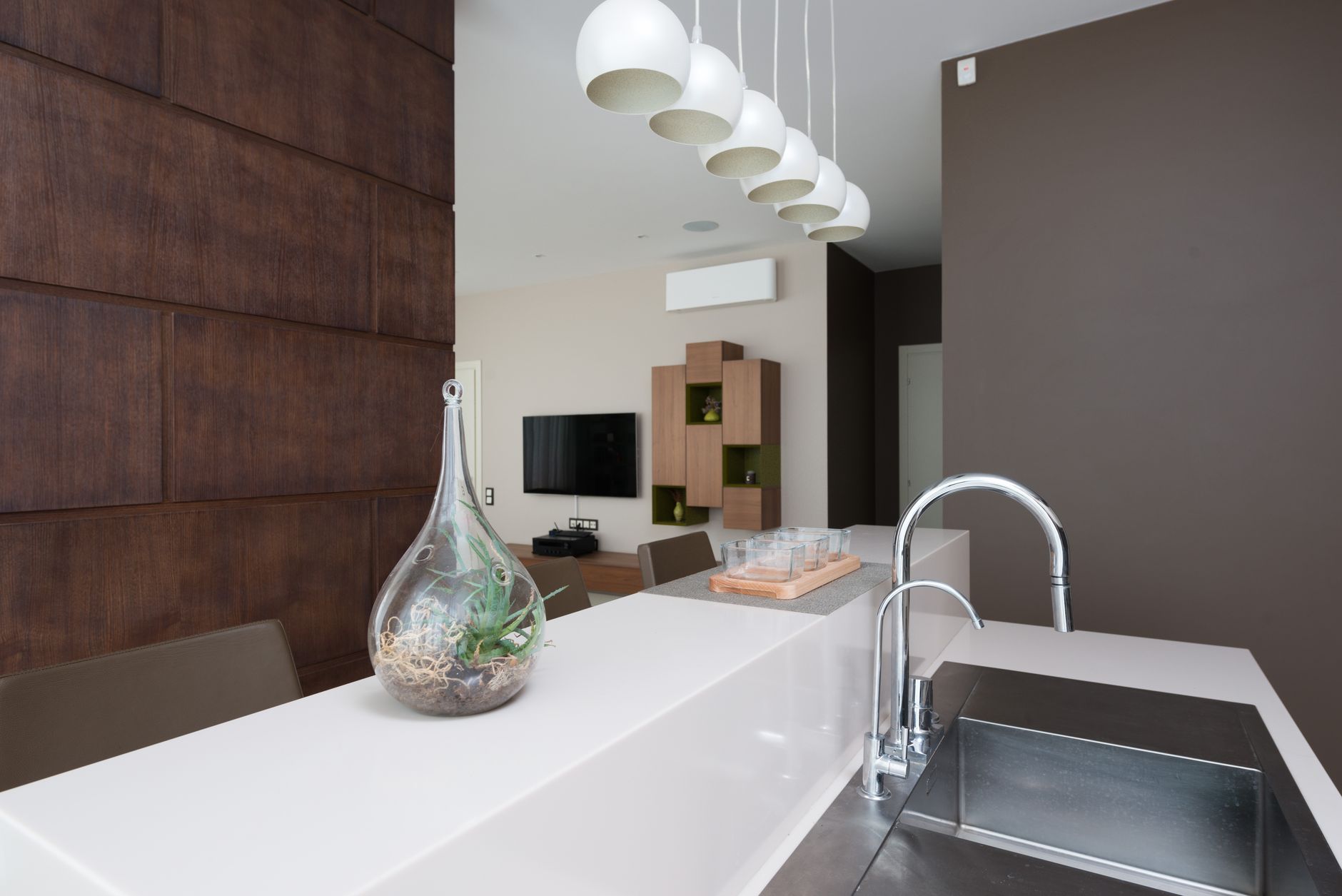
Custom Countertops in Temecula, CA
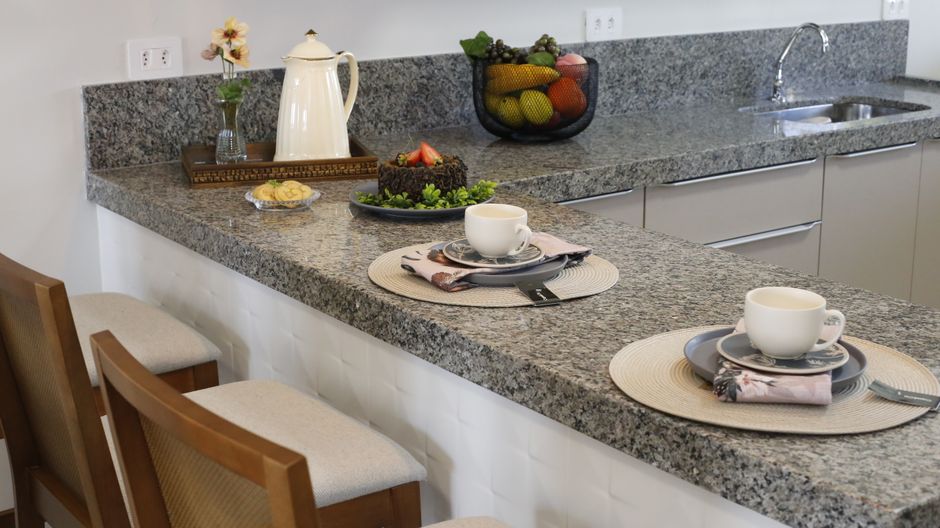
Practical notes on custom countertop fabrication and installation in Temecula, CA, from choosing granite, quartz and porcelain slab to sealing and sun.
What We Cover
- Counters for Redhawk and 1990s Temecula Homes What fabricators find when replacing counters in master-planned Temecula subdivisions built in the 1990s, from tile to cabinet layouts.
- Countertops in Temecula Summer Heat and Sun What a hot semi-arid August and direct sun through glass do to quartz, natural stone, porcelain and concrete.
- Granite or Quartz for a Temecula Kitchen How granite and quartz compare in a busy Temecula kitchen, from hot pans and wine spills to seams and daily wear.
- Outdoor Kitchens and Patio Bars in Temecula Which counter materials hold up on a patio bar or outdoor kitchen built for entertaining near Temecula Valley wine country.
- Quartzite or Porcelain Slab for Temecula Homes How natural quartzite and thin porcelain slabs differ in hardness, heat, edges and upkeep for a Temecula kitchen.
- Sealing and Caring for Stone Counters in Temecula How to test whether granite or quartzite still needs sealer, how often to renew it, and what hard water leaves around sinks.
Custom Countertops in Temecula, CA
A custom countertop job in Temecula, CA starts in the kitchen with a tape measure and a level, long before any stone is cut. The crew checks the cabinets, the wall lines and the sink location, then makes a digital template that records every wiggle. The slab is cut to that template at the shop, and the install is a matter of fitting, leveling and setting seams in the right place.
Homes the work happens in
Temecula grew fast in the 1990s, and many kitchens in master-planned communities like Redhawk still carry the original tile or laminate. Older tops come out first, the plywood under the sink is checked, and the new stone is fitted to cabinets that were built a few decades ago. Newer homes in French Valley and near Old Town Temecula bring their own layouts, with islands, long runs and waterfall ends.
Materials and the climate
Granite, quartz, quartzite, porcelain slab and concrete each behave differently under a hot semi-arid sun. August is the hottest month here, and a west-facing window or an open patio can be hard on resin-based surfaces. Natural stone and porcelain hold their color, while quartz is kept indoors and out of direct light where possible. Rain is rare, but a patio counter still needs a slight pitch for the days it does fall.
Entertaining in wine country
Temecula Valley wine country sets the tone for how people use their kitchens. Long evenings, red wine on the counter and a patio bar for guests mean the surface has to take spills, heat and a lot of elbows. Outdoor kitchens need cutouts for grills and sinks, a real overhang for stools and an edge that handles the sun.
Guides
The pages here cover granite against quartz, summer heat and sun, outdoor kitchens and patio bars, sealing and care, counters for 1990s homes and the choice between quartzite and porcelain slab. Each one is written from the shop and install side of the work, around Interstate 15 and the Temecula Parkway corridor.
Latest Guides
Soapstone, Concrete, Marble and Butcher Block: Questions About the Less Common Counter Materials
2026-10-06
Most Temecula kitchens end up with granite or quartz, and for good reason. A smaller group of homeowners goes looking for something else: soapstone for its dark, soft look, concrete for a poured and personal finish, marble for the veining, or butcher block for a warm work surface at the end of an island. Each of those materials asks for something different in return, and a few of them suit the valley's hot, dry climate better than others. The questions below come up often when someone is weighing one of these choices.
Is soapstone a good fit for a working kitchen?
Soapstone is a dense, quarried stone that is rich in talc, which makes it soft to the touch and very stain resistant. It is nonporous, so wine and oil do not soak in, and acid does not etch it. Heat does not bother it, and a hot pot can go straight down.
The trade is the surface itself. It is soft enough to scratch with a key, and the scratches are part of how soapstone ages. Most owners rub on mineral oil to even out the color, which darkens the stone to a deep charcoal and hides the marks. It will develop a patina over the first year, and the people who like that look rarely regret it. People who want a surface that looks the same in ten years usually choose something harder.
What does concrete do in Southern California heat?
Concrete handles heat without complaint. A countertop poured or cast in a shop and set in place is a mix of cement, sand, aggregate and pigment, so the color can be matched to cabinets or a backsplash. It is a good choice for a patio bar, since the surface is not affected by sun and does not fade.
The weak points are porosity and movement. Raw concrete is porous and stains easily, so a penetrating sealer and sometimes a topical coat go on at the end of the job and are refreshed over time. Hairline cracks are common as the slab cures and expands and contracts with daily temperature swings. Many owners accept them as part of the look. Others ask the maker to plan control joints, or to reinforce the piece, so cracks stay minimal.
Can marble work in a kitchen where people actually cook?
Marble is calcium-based, so acid etches it. A lemon, a splash of vinegar or a tomato sauce spill can leave a dull spot where the polish used to be. Wine does the same, and a glass left overnight can show up as both a stain and an etch.
Some owners accept that and treat the marble as a surface that wears in, in the way a leather chair does. A honed finish hides etching much better than a polished one, which is why many marble kitchens are done in a matte finish. Others use marble only on a baking station or a bathroom vanity and put granite or quartzite where the cooking happens. In a house with a lot of entertaining, a marble island is the first thing guests will touch, and it is also the first thing that will show it.
How does butcher block hold up?
Butcher block is wood, glued up in strips or end grain, and finished with oil or a hard wax. It is soft, quiet, easy on dropped glasses, and a knife leaves marks in it. The marks are usually sanded out with a block and a little oil.
It dislikes standing water, so it is a poor match around an undermount sink unless the edge is sealed and the owner keeps up with it. In Temecula's dry air, wood can shrink and open a gap at the seam, so humidity changes matter more than people expect. Most butcher block in the valley is used as an island top or a single section, with stone elsewhere.
What is the difference between quartzite and quartz, and why does the name matter?
Quartzite is a natural stone, formed when sandstone is fused into dense rock under heat and pressure. Quartz is manufactured from crushed stone bound with resin. The two names are close, and they perform differently. Quartzite is harder than granite and tolerates heat. Quartz resists stains because it has no open pores and is vulnerable to heat and ultraviolet light.
The confusion has a practical side. Some softer stones, such as dolomitic marble, are sold under the quartzite name, and they etch under acid. A fabricator can test a sample with a drop of lemon juice, and a true quartzite will not change.
Are porcelain slabs really counter-ready?
Porcelain slab is a large, thin panel made from clay and minerals and fired at very high temperature. It is nonporous, heat tolerant and does not fade, which is why it has become the first choice for outdoor kitchens in wine country. The color and pattern can imitate marble, concrete or stone, and the surface does not take a stain.
The thin profile is the catch. An edge needs a miter to look thick, and a sharp corner can chip if something heavy lands on it. Cutouts for a sink or a cooktop need rounded corners, since a sharp inside corner starts a crack. A shop that cuts porcelain regularly knows how to handle that.
Which of these suits a home near Lake Skinner or Vail Lake?
Homes around Lake Skinner and Vail Lake tend to sit on larger lots, with patios, outdoor kitchens and long views, and they see more sun and wind than a kitchen tucked into a subdivision. That points toward materials that ignore the weather: porcelain slab, dense granite and sealed concrete. Soapstone and butcher block belong indoors, where they are protected. Marble is a choice made for the look and kept for the spots where acid is rare.
Homes in older parts of town near Old Town Temecula, and in the communities built in the 1990s, usually take a mix. A granite or quartzite kitchen with a butcher block island top is a common combination, since the stone does the heavy work and the wood adds softness.
How is each material cut and fitted?
Granite, quartzite, soapstone and marble are cut at a shop with diamond blades and a water-fed saw, and they are fitted on site with adhesive. Porcelain uses a specialized saw and extra care at the corners. Concrete is either poured in a form at the shop or cast on site, and wood is cut and glued like furniture.
Every one of these starts with a template taken after the cabinets are set, and every one needs a seam in the right place if the run is long. A seam near the sink is a common choice, since it falls in a spot where the eye is busy and the support from the cabinet below is strong.
Does a less common material change how long the job takes?
It can. Soapstone and marble are cut in the shop like granite, so the timeline looks similar. Poured concrete needs cure time before it is sealed and set, and a large slab of porcelain may need to be ordered in for the job. Butcher block is usually the quickest to fit, though it needs finishing before it is used.
The right material is the one whose habits the household can live with, because every surface in this list rewards a different kind of care.
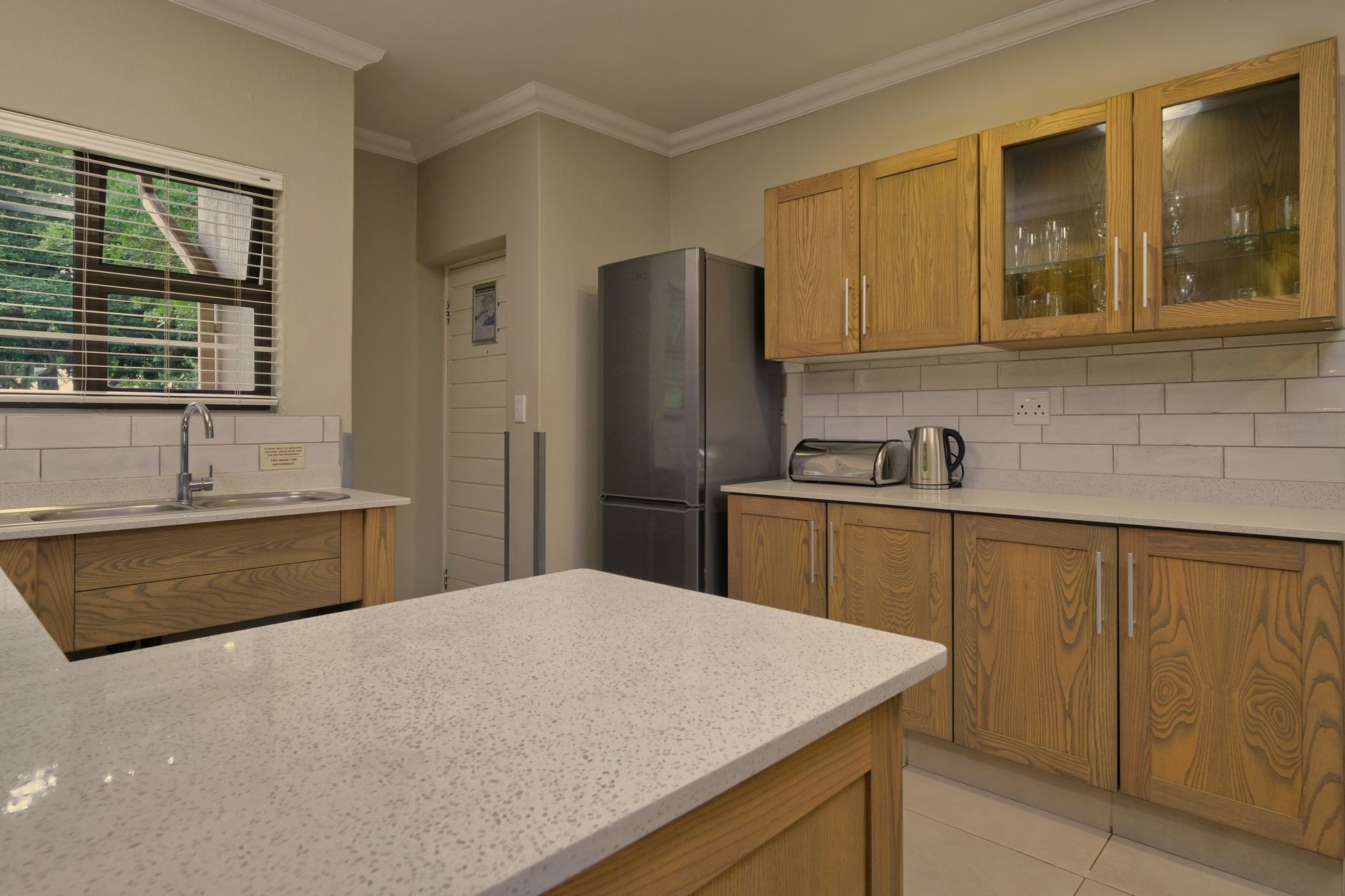
Spills, Stains and Stone: What Wine, Oil and Citrus Do to Each Counter Material
2026-10-06
A harvest weekend in Temecula Valley wine country puts a lot of liquid on a lot of countertops. Red wine goes down at the island, olive oil goes onto the bread, a lemon wedge ends up on the edge of a glass, and somebody sets a hot sheet pan on the one spot that was supposed to stay clear. Each of those leaves a different mark depending on what the counter is made of, and the marks are mostly predictable once the material is known.
Why do the same spills behave differently on different counters?
Three properties decide almost everything: how porous the surface is, how reactive it is to acid, and how well it tolerates heat. Quartz and porcelain slab are close to nonporous, so liquid sits on top and wipes off. Granite and quartzite are natural stone with tiny pores that range from nearly sealed to fairly open depending on the slab. Marble and concrete are the thirstiest and the most reactive, and each needs a protective coat to behave in a kitchen that sees real use.
Acid is a separate matter from staining. A stain is a pigment that soaks in. An etch is a chemical reaction that dulls the polish on calcium-based stone, and it can happen in minutes with no color at all. Wine, citrus, vinegar and tomato are all acidic, which is why a lemon wedge can do more damage to marble than a glass of red.
What does each common spill do to each material?
The table below is a rule-of-thumb reading, based on how these materials are made and how they behave in kitchens around the valley. A sealed surface performs better than an unsealed one in every row that involves natural stone.
Material Red wine Olive oil Lemon or vinegar Hot pan Quartz Wipes off Wipes off No effect on the surface Resin can mark, use a trivet Porcelain slab Wipes off Wipes off No effect Tolerates heat well Dense granite Safe if sealed Safe if sealed No effect Tolerates heat well Open-grained granite Can stain if left Can darken Mostly no effect Tolerates heat well Quartzite Safe if sealed Can darken if unsealed True quartzite is unaffected Tolerates heat well Marble Stains and etches Darkens Etches quickly Usually fine, but check the finish Concrete Stains without a good sealer Darkens Etches the surface Tolerates heat, sealer may mark How should red wine be cleaned up?
Speed matters more than product. Blot the spill with a paper towel instead of wiping, because wiping spreads the liquid into the pores around it. Follow with warm water and a few drops of dish soap on a soft cloth, then dry the spot. On a sealed granite or quartzite counter that is usually the end of it.
If a ring shows up the next morning on natural stone, a poultice made for stone is the next step. It is a paste that sits over the stain, dries, and draws the pigment back out of the pores. It takes a day or two and sometimes a second round. Bleach and ammonia are not part of the routine, since both can dull the finish and neither is needed for wine.
What about olive oil and cooking grease?
Oil is slower than wine and sneakier. It does not leave a surface mark, it soaks in and darkens the stone around the spot, and the darkening can look permanent when it is not. On granite and quartzite with a working seal, oil sits on top long enough to wipe away. Without the seal, the same oil can take a day to show.
The fix is the same poultice method, with a degreasing agent suited to stone. Dish soap handles fresh oil. For quartz and porcelain slab the question does not come up, since a damp cloth does the job.
Is lemon really that bad for stone?
For marble, yes. A lemon wedge left on a polished marble top for an afternoon leaves a dull patch where the finish was eaten away. That patch is not a stain, so no cleaner removes it, and the repair is a re-polish by a stone refinisher. Limestone and some soft stones behave the same way.
Granite is mostly silica and feldspar, so acid leaves it alone. True quartzite is similar. The caution with quartzite is the label, because some softer stones are sold under that name and still etch. A quick test on a sample, a drop of lemon juice for ten minutes, shows which kind it is.
How does a hot pan figure into the same routine?
Heat is the one hazard that natural stone handles better than the manufactured surfaces. A pan off the range will not mark granite or quartzite. Quartz holds crushed stone together with resin, and resin is what responds to heat, so a very hot pot can leave a pale ring on a quartz top. Porcelain slab is fired at kiln temperatures and tolerates a pan or a grill lid without trouble.
Thermal shock is a rarer problem. A stone with a long fissure or a thin section near a cutout can crack if a very hot item goes down on one spot and cold water follows it. The habit of using a trivet protects against it on every material.
Which cleaners are safe for daily use?
Warm water and a mild dish soap are safe on every surface in the table. A spray cleaner made for stone is fine on granite, quartzite and marble. Avoid vinegar, lemon-based products and anything labeled as a descaler on natural stone. Avoid abrasive powders on polished surfaces, since they leave fine scratches that read as a haze in raking light.
Hard water leaves a white ring at the faucet base on many kitchens in the Temecula area. A soft cloth and a stone-safe cleaner lift it. A quick wipe after use keeps it from building into a crust.
When does a sealer go on, and when is it skipped?
Sealer matters on granite, quartzite, marble and concrete, and is not needed on quartz or porcelain slab. A simple test shows when a stone needs it: a spoonful of water left for ten minutes should bead, not darken the surface. If the stone darkens, the seal has worn and a fresh coat goes on. Sealing a counter that still beads only leaves a film, so the test comes first.
Sealer buys time, not immunity. It gives a spill several hours before it soaks in, which is enough for a normal household, and less than a full night. Marble stays vulnerable to acid even when sealed, since a sealer protects the pores and does nothing about the chemical reaction.
What changes for an outdoor bar or patio kitchen?
An outdoor counter near Temecula's vineyard properties meets the same wine and citrus, plus dust from the afternoon breeze and months of direct sun. Porcelain slab and dense granite deal with that best. Concrete works with a strong sealer and a willingness to accept patina. Quartz is the weak choice outdoors for reasons that have nothing to do with spills: ultraviolet light is hard on resin.
A bar top that gets rinsed with a hose after a party does well in a nonporous material. A stone top needs a dry wipe-down first, so water does not carry wine into the pores. On either one, an overhang and a slight pitch keep liquid from running back toward the cabinet.
A counter that matches the way a household actually cooks and entertains makes the spill table nearly irrelevant, since nothing on the list is a surprise anymore.