Sealing and Caring for Stone Counters in Temecula

Nothing about a stone counter looks wrong the day it stops repelling water, and the first sign is usually a dark patch beside the sink in a Temecula, CA kitchen. Granite and quartzite are natural stone, and a sealer is what keeps wine, oil and water from soaking in, a point that (in the notes at custom countertops temecula pretty little wine moms) comes up again and again for any custom countertop job. Keeping that seal working is a short task done on a schedule.
The water drop test
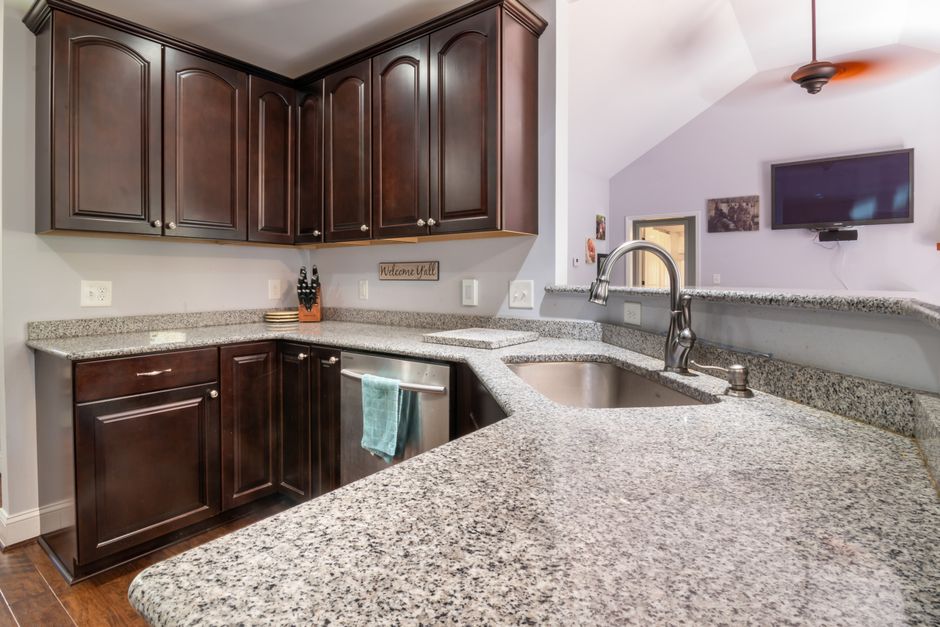
Put a spoonful of water on the stone and leave it for ten minutes. If the water beads up, the sealer is working. If the stone darkens under the drop, the pores are open and it needs a new coat. Test a few places, near the sink, by the range and at the end of the run, because wear is uneven.
How often sealer is renewed

There is no calendar answer, since it depends on the stone. A dense dark granite may hold a seal for years, while a lighter, more open granite or a porous quartzite may need attention every year or so. Test first and seal when the test says so. Sealing a counter that does not need it only leaves a film.
Applying it properly
Clean the surface, let it dry fully, and wipe sealer on in a thin coat. Leave it for the time on the bottle, then buff off every trace of the excess. Sealer left on the surface turns into a hazy, sticky patch that is much harder to remove than a stain. Seams and the area around a sink cutout get extra attention, since water finds them first.
Hard water around the sink
Water in the Temecula area carries minerals, and the white ring at the faucet base is the residue. A soft cloth with a mild stone-safe cleaner takes it off, and a quick wipe after use stops it from building up. Avoid vinegar and lemon-based cleaners on natural stone, since acid dulls the finish. An undermount sink leaves the edge exposed to splashes, so that strip is the first to show water marks.
Cleaning up after wine and olive oil
Blot wine, do not wipe it, and rinse with warm water and a drop of dish soap. Olive oil on stone that has lost its seal can darken the surface, and a poultice made for stone pulls it back out over a day or two. Quartz, which is not porous, needs no sealer, just soap and water.
Daily habits that matter
A trivet under hot pans, a mat under a heavy ceramic vase and a wipe after cooking are enough. Marble and soapstone behave differently, since marble etches under acid and soapstone darkens with oil before it settles, so each gets its own care routine.